
 The reshoring of American manufacturing jobs is among the most exciting things leaders in the plastics industry have seen in a long time. Yet, to sustain this kind of renewed investment, it will be important for the manufacturing sector to continue to learn, grow and keep up with key trends—including automation, sustainability and workforce training and future-proofing. Here’s why these three U.S. manufacturing factors represent the next chapter for American companies and their teams.
Trend 1: Automation and digitization will become differentiators for successful U.S. manufacturers
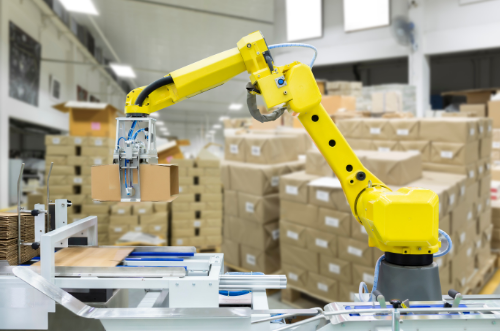
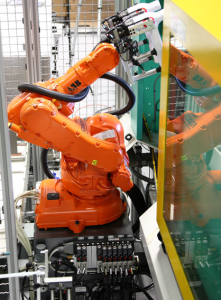
In a world where nearly everything is connected to the internet all of the time, manufacturers must continue to invest in meeting the demands of the automated and digital world. In a recent McKinsey & Company analysis titled “Delivering the US manufacturing renaissance,” researchers shared the following insights about the rapid embrace of automation in the industry:
- The installed base for advanced robotics—already a $50 billion industry—is expected to grow 6% annually through at least 2025.
- Annual investments in automation are soaring and collectively represent $700 billion in annual spending across artificial intelligence, Internet of Things technologies and cloud computing.
- Advanced analytics for supply chains has risen as a top investment category for almost half of supply chain leaders, with 27% expediting related plans amid global uncertainty.
Reasons for automation and digitization are diverse and include cost savings, a competitive edge and responding to an incredibly complex global marketplace. The best way to move automation forward, the McKinsey authors say, is by including it as part of an overall modernization strategy for U.S. manufacturers in preparation for the “next phase of the digital age” to remain in “lockstep with every-evolving demands, investors, regulators and customers.”
Trend 2: Sustainability priorities will help manufacturers meet demand while continuing to grow environmental stewardship
To continue their focus on environmental stewardship, U.S. manufacturers will need to continue developing and investing in corporate social responsibility strategy. Simply put, sustainability will grow as a priority for manufacturers seeking to do more with less.
Increasingly warm temperatures and severe weather around the world are factors leading investors and consumers to ask manufacturers to continue prioritizing natural resource stewardship. For example, residents and workers from China to California experienced massive heat waves during the summer of 2022. This will be especially true for manufacturers of industrial products made from chemicals, petroleum, coal and pulp and paper, which account for about 70% of industrial energy use, according to ARC Advisory Group. Use of renewable energy sources and alternative manufacturing materials could be among the strategies manufacturers use to meet the market for increasingly sustainable production systems.
Taking steps to continue reducing environmental footprint and tell those stories of progress to the public will help manufacturers grow their sustainability investment in an economically viable way.
Trend 3: Workforce training will keep a competitive edge and future-proof manufacturers
In light of the automation and sustainability trends, workforce training has never been more important. Upskilling will be necessary to ensure manufacturers and their teams have the latest knowledge and experience with practices such as additive manufacturing. They’ll also invest in support for technologies such as artificial intelligence, deep learning, the industrial internet of things and robotics, according to the Association for Advancing Automation.
Yet, a crush of new systems and innovations doesn’t have to mean greater complexity. In fact, there could be a renaissance in using technology to achieve greater simplicity. As the leaders of senswork Inc, a U.S.-based manufacturing company with German roots, noted in a recent online article, the future of domestic production could embrace a Smart Factory approach that “reduces the manufacturing complexity and saves production time and resources.”
Successful workforce training will include implementing strategies to make technology work for the benefit of manufacturers and their teams—not the other way around.
Although the future is impossible to predict, these three trends of automation and digitization, sustainability, and workforce development are likely to play a key role in U.S. manufacturing. At Plastics Manufacturing Resources, we will continue to monitor the future of our industry while helping our customers create custom plastic parts that meet the rapidly changing needs of the marketplace. We’d love to help your organization, too. To learn more or to schedule an appointment, visit the Plastic Manufacturing Resources website.